



Phoropter Repair vs. Replacement: A Practice Owner's Guide
A phoropter takes a beating that most instruments never see. Every refraction means dozens of dial turns, lens swaps, and quick flips between settings, day after day. So when the dials start sticking or the lenses won't click cleanly into place, it's rarely a surprise. It's wear catching up with a hardworking instrument.
The real question for a practice owner is what to do about it. Repair the phoropter you have, or replace it with a refurbished unit? This guide breaks down how phoropters fail, what each path costs, and how to keep the lane running while yours is in the shop. (And yes, whether you spell it phoropter or phoroptor, we fix both.)
How Phoropters Fail Over Time
A phoropter is a dense package of lenses, dials, and detent mechanisms working in tight tolerances. None of it is fragile, but all of it wears. The lens discs rotate thousands of times a month, and the click-stops that hold each power in place slowly lose their crispness.
Add in the occasional bump when it swings on the stand, plus dust and fingerprints on the lenses, and you get the slow drift that defines an aging phoropter. The instrument still works. It just stops feeling precise, and precision is the whole point.
Signs Your Phoropter Needs Service
If you're reading this, you've probably already noticed one of these and wondered whether it's worth dealing with. It usually is.
Mechanical wear
Sticky or gritty dials, detents that no longer click firmly, and a unit that won't stay put on the stand are the most common complaints. Worn detents are the sneakiest, because a lens that doesn't seat fully can sit slightly off-axis without you noticing. That turns into prescriptions that feel a little off for reasons nobody can pin down.
Optical drift
Hazy or spotted lenses, a cross-cylinder that feels imprecise, and cylinder axis that doesn't line up are signs the optics need cleaning or recalibration. A phoropter that's out of calibration produces refractions you can't fully trust, and that erodes confidence in every exam you run on it.
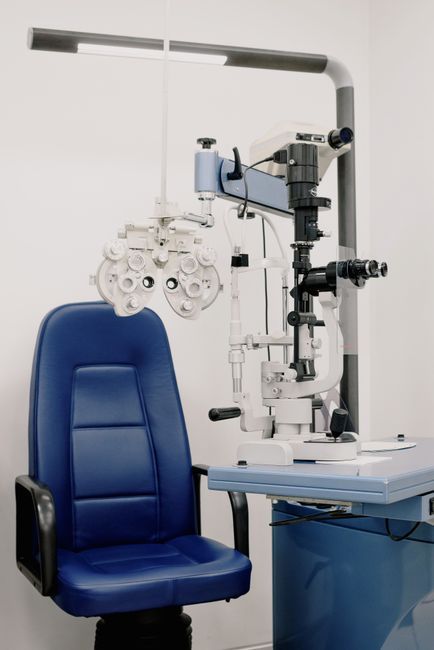
Lane-Side Check: Run every lens power through its full rotation and listen. A dial that's smooth in one range and gritty in another is telling you exactly where the wear is. Note which powers feel off before you send it in, and your technician can target the fix faster.
Repair Cost vs. a Refurbished Replacement
Most phoropter problems are mechanical or optical wear, and both are repairable. A clean, calibrate, and detent rebuild restores the feel and accuracy of the instrument for far less than a new unit costs. For a phoropter in otherwise good shape, repair is usually the clear winner.
Replacement makes more sense when the housing is cracked, internal parts are obsolete, or the instrument has been limping along through repeated issues. In those cases, a quality refurbished phoropter gets you a like-new instrument without the new-equipment price tag. Capital Ophthalmic has built its reputation across Georgia, Alabama, and the Southeast on this exact judgment call, which is why practice owners lean on us to tell them honestly whether a repair will hold or whether it's time to swap. Our reconditioned ophthalmic equipment goes through full inspection and calibration before it ships, and it carries a performance guarantee.
Our Refurbishment and Repair Process
Whether we're repairing your phoropter or reconditioning one for sale, the work follows the same standard. We disassemble, clean every lens and surface, rebuild worn detents and dial mechanisms, and recalibrate the optics so axis and power read true. Then it gets tested before it goes back into service.
That calibration step is non-negotiable. A phoropter that turns smoothly but isn't calibrated is still handing you bad data. You can see everything our bench handles on the ophthalmic instrument repairs page, and if you have an old unit gathering dust, we also buy used ophthalmic equipment.
Avoiding Downtime While Yours Is Serviced
A phoropter out of commission can stall a whole lane, so the goal is to minimize the gap. Ask about loaner availability when you schedule service, and plan the repair around a lighter clinic day when you can. Build the timing into your week instead of waiting for a total failure that forces an emergency.
The Long View: Practices that replace a phoropter at the first sign of stickiness often spend thousands to solve a few-hundred-dollar problem. The instrument was never the issue. It just needed the same tune-up any high-use precision tool eventually needs.
Bringing Your Phoropter Back Into Focus
A sticky dial or a soft detent doesn't mean your phoropter is finished. More often it means it's overdue for service that restores the precision your exams depend on. Before you price out a replacement, talk to our team about a repair quote and what your current unit is really worth.
FAQs
What's the best way to decide between phoropter repair and replacement?
The best phoropter repair decision comes down to the instrument's condition and parts availability. If the housing is sound and parts are still made, a clean and calibration usually restores it for far less than a new unit. Replace it only when it's physically damaged, obsolete, or failing repeatedly.
How often should a phoropter be calibrated?
Plan on a professional calibration at least once a year, and sooner if you notice axis drift or refractions that feel inconsistent. Heavy daily use accelerates wear on the detents and lens discs. Annual service keeps small alignment issues from quietly affecting your prescriptions.